
.png)

October 22, 2020
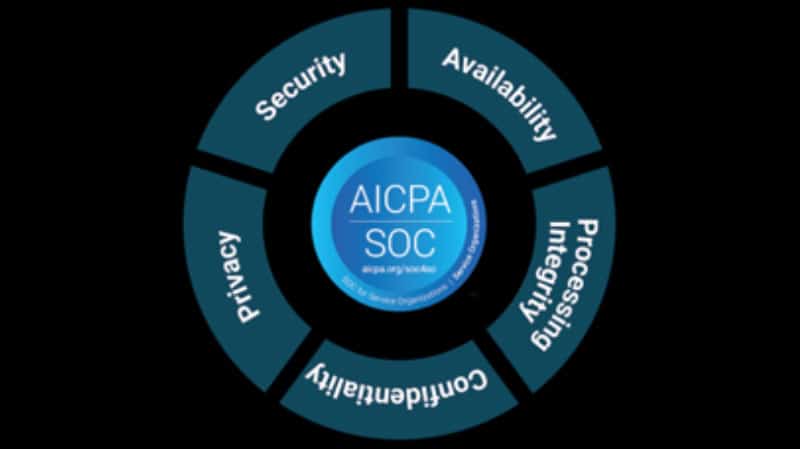
If you’re a service company such as a cloud or SaaS provider, you need to pass what’s called the System Organization Controls (SOC) 2 audit. Passing the audit shows that you take cybersecurity seriously. But how do you pass? Well, you need to:
In other words, there’s no one-size-fits-all approach to SOC 2 audits. So, here’s a rundown of the 5 principles so you can decide which ones fit your company’s requirements.
Security, or common criteria, is the only mandatory category. It’s mandatory because it sets out some fairly simple cybersecurity standards for service companies to meet.
Basically, you need to show that you can protect your systems from unauthorized access. Ways to pass this category include using:
If you process client data, you need to show that you can process it quickly, accurately and securely. So, you need tools in place to spot processing errors like:
This category is less important if you just store data rather than process or handle it.
If you handle restricted or classified data, you need to pass the confidentiality category. That’s because you must show that you have sufficient security in place to prevent unauthorized access and data leaks.
To pass this category, you need tools like:
This category is less about restricted data and more about personal information, like names, addresses and telephone numbers. You need to prove you:
If service availability is critical to your contract with the client, you need to prove you’re taking all possible steps to keep your service online. In other words, you probably want to pass the availability category. You can pass by:
If you’re unsure which SOC 2 principles apply, ask a compliance specialist for advice.
.png)